
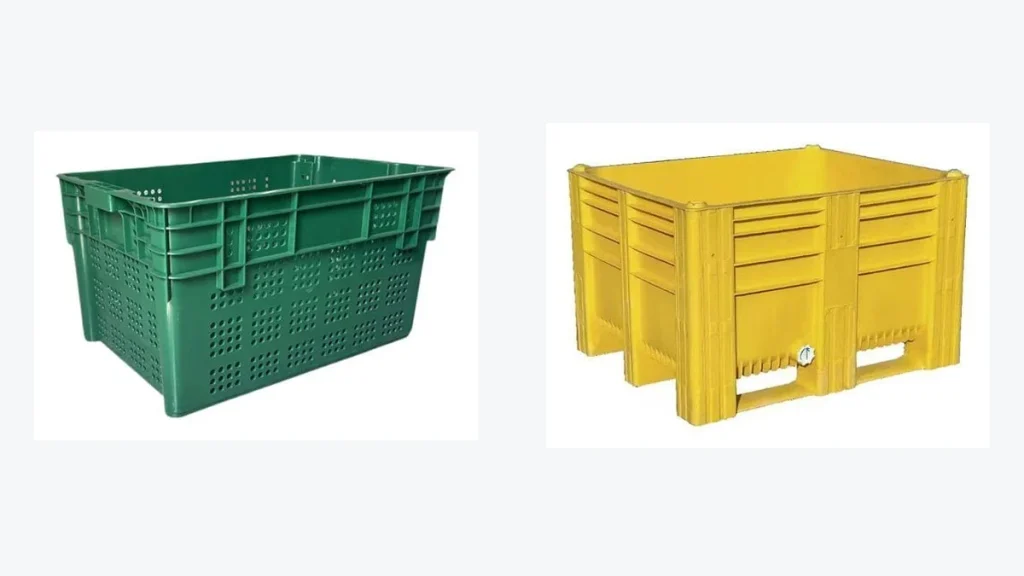
Plastic crates and plastic pallet boxes both move and store goods, but they are designed for different load sizes and handling patterns. A crate is usually selected for smaller items that people can pick, sort or carry as individual units. A pallet box combines a large container with a pallet-style base for bulk goods and mechanical handling.
The right choice depends on the goods, the loaded weight, the handling equipment and what happens to the empty packaging after delivery. Buyers should compare the complete logistics cycle rather than choosing by outside appearance.
What is a plastic crate?
A plastic crate is a reusable container for parts, packaged goods, produce and other items that need sorting, picking or frequent access. Crates may have solid or ventilated walls. Depending on the model, they can stack, nest or fold when empty.
Crates suit operations that divide goods into smaller handling quantities. They can move through workstations, shelves, carts and local delivery routes, provided the selected dimensions and load data match the system.
What is a plastic pallet box?
A plastic pallet box is a larger bulk container with a base designed for forklift or pallet handling. It holds loose goods, components or packaged items as one unit load. Models include rigid one-piece boxes, foldable pallet boxes, modular boxes and sleeve packs.
The base, wall construction and entry arrangement vary by model. Buyers must confirm usable volume, loaded weight, stacking condition and handling method for the exact pallet box under review.
Plastic crate vs pallet box: main differences
| Buying factor | Plastic crate | Plastic pallet box |
|---|---|---|
| Typical handling unit | Smaller quantity for picking, sorting or manual access | Bulk quantity handled as a palletized unit |
| Handling method | Manual handling, carts, shelves or conveyors where compatible | Forklift or pallet handling according to the base design |
| Access to goods | Frequent access to individual crates or contents | Access to a larger batch; drop doors may be available on selected models |
| Empty storage | Nestable or folding options may reduce empty volume | Foldable, modular or sleeve designs may reduce empty return volume |
| Selection focus | Internal size, wall type, handles, stacking and nesting | Usable volume, base entry, loaded handling and stacking condition |
Choose a crate when access and sorting come first
A crate is often the better starting point when workers need to separate parts, pick orders or move manageable quantities between work areas. Confirm the usable internal dimensions, handle design and compatibility with shelves, carts or conveyors.
Wall design is a separate decision. Ventilated walls support airflow and drainage, while solid walls help contain small items or residue. Buyers can compare these options in the guide to vented vs solid plastic crates.
Choose a pallet box for bulk unit loads
A pallet box is more suitable when the goods move as one larger load and mechanical handling is part of the route. The quotation should state the exact model, base structure, forklift entry, loaded weight and stacking condition.
Rigid boxes keep their shape during use and empty storage. Foldable designs can reduce empty return volume, but buyers should also check assembly steps, hinge or panel design and the space needed to fold and reopen each unit. The existing foldable vs one-piece pallet box guide explains this choice.
Compare the empty return process
Return logistics can change the total cost of reusable packaging. For crates, compare nesting or folding height and the labor needed to separate empty units. For pallet boxes, compare folded height, loose components and the equipment used to rebuild the container.
Do not assume that every reusable container saves the same amount of return space. Ask for the actual empty configuration of the selected model.
Check interfaces before ordering
- Measure both the external footprint and usable internal space.
- Confirm the goods, loaded weight and how the load is distributed.
- Record the forklift, pallet jack, cart, shelf or conveyor interface.
- Check whether lids, dividers, liners, labels or drop doors are required.
- Confirm cleaning, drainage and identification needs.
- Test a representative load when the handling route has tight clearances or automated equipment.
What to include in an RFQ
Send the product type, goods, required internal size, expected loaded weight, quantity, handling method, stacking requirement, empty return plan, wall type, color or marking needs and destination. If the packaging must fit existing equipment, include the interface dimensions.
Buyers can browse Zhenghao’s plastic crates and plastic pallet boxes, or send the project requirements for a model-specific comparison.
Frequently asked questions
Can a plastic crate replace a pallet box?
Only when the goods, quantity and handling route fit the smaller crate format. A pallet box is a different unit-load system and should not be replaced without checking capacity, handling and stacking requirements.
Which option saves more return space?
That depends on the model. Nestable or folding crates and foldable pallet boxes can all reduce empty volume. Compare the actual empty dimensions and return quantity.
Can both products be made from PP or HDPE?
Yes. Zhenghao can supply PP or HDPE options depending on the model and project requirements. Confirm the material for the selected product before ordering.