
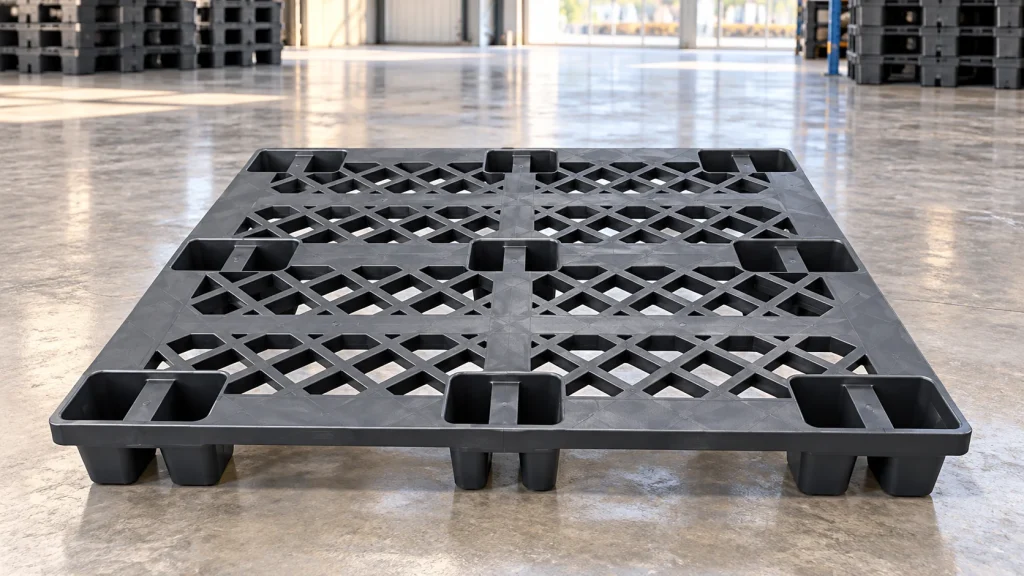
Nine-leg plastic pallets are selected for many handling, storage and transport projects, but the name alone is not enough to choose a model. Current products can differ in footprint and deck configuration. Buyers get a better recommendation when they describe the goods, handling route and operating conditions before asking for a quotation.
This guide supports Zhenghao’s 9-Leg Plastic Pallets category. The category is the place to browse current models. The questions below help turn a general request into a useful project brief.
Start with the name, then check the structure
Buyers may write 9-leg, nine-leg or nine-feet plastic pallet. In this context, those terms refer to the same basic support-layout naming convention. They do not identify one universal product specification.
Open the relevant product pages before making a final choice. The visible support layout is only one part of a pallet. The deck, dimensions, construction and intended handling conditions still need to match the actual project.
Describe the goods and unit load
Start with the goods that will sit on the pallet. State the package type, outside footprint, approximate total weight and whether the load is stable on its own or needs additional wrapping or restraint. A pallet decision should follow the real unit load, not a generic description of the product family.
Include a photograph or a simple loading sketch when possible. This shows how cartons, bags, trays or other packages contact the deck and whether the edge of the load needs particular attention.
Choose the deck around the contact surface
Current nine-leg models include different deck configurations. Buyers should explain what directly touches the pallet and how the goods are packed. That makes it easier to compare a current grid-deck option with a flat-deck option without assuming that either design is right for every shipment.
The final choice still needs confirmation against the selected model and the buyer’s own load. A product-family label cannot replace a check of the deck, dimensions and operating conditions.
Confirm the footprint before comparing models
Record the required pallet footprint and the space available in the warehouse, vehicle and destination. The footprint should fit the packaged goods and the surrounding process. It should not be selected only because a particular size is familiar in another operation.
Use the product page for the exact dimensions of a candidate. For example, the current 1400×1200 Grid Nine-Leg Plastic Pallet page is a model-specific route, while the category page remains the better place to compare the range.
Map every handling point
List where the pallet is loaded, transferred, stored, unloaded and returned. Include the equipment and handover points used in the process. A pallet can only be evaluated properly when the complete route is known, including any tight spaces, conveyor transitions or delivery points that are relevant to the buyer.
Do not rely on a general compatibility statement. Ask for confirmation against the actual handling arrangement and the specific model under consideration.
Separate storage needs from transport needs
Storage and transport can impose different conditions. Describe how pallets are positioned while loaded, how long they remain in each stage and whether they move through several locations. If empty pallets return after delivery, include the return method and the space available at each end of the route.
This does not mean every nine-leg model has the same return or storage behaviour. It means the buyer should make those conditions part of the enquiry.
Clarify cleaning and environment requirements
Explain the operating environment, including any cleaning routine, exposure conditions or site rules that affect the project. These details help a supplier assess which current model should be considered. They are not a substitute for model-specific confirmation.
Where the operation has special hygiene, temperature, chemical or compliance requirements, provide them in writing. Do not infer suitability from a product-family name.
Use product pages for the final comparison
Once the brief is ready, compare the available 9-Leg Plastic Pallets and open the relevant model pages. A flat-deck example is the current 1200×1000 Flat Deck Nine-Leg Plastic Pallet; it should be checked against the project rather than used as a general specification for the whole category.
Prepare a clear enquiry
A useful enquiry contains the goods, loading pattern, approximate unit-load weight, required footprint, deck contact needs, handling route, storage conditions, return plan, destination and order timing. This gives the supplier a practical basis for narrowing the current range.
If the project involves a wider pallet selection, begin with the main Plastic Pallets category and then return to the nine-leg range when the required structure is clear.
Use this checklist before ordering
- Goods, packaging pattern and approximate unit-load weight
- Required footprint and available operating space
- Deck contact needs and any packing materials
- Handling points, storage stages and destination route
- Environmental, cleaning and site-specific requirements
- Empty return method, quantity and delivery timing
Where to go next
Browse the current 9-leg range after completing the brief. When you have the project details, send Zhenghao an enquiry for a model-specific recommendation.