
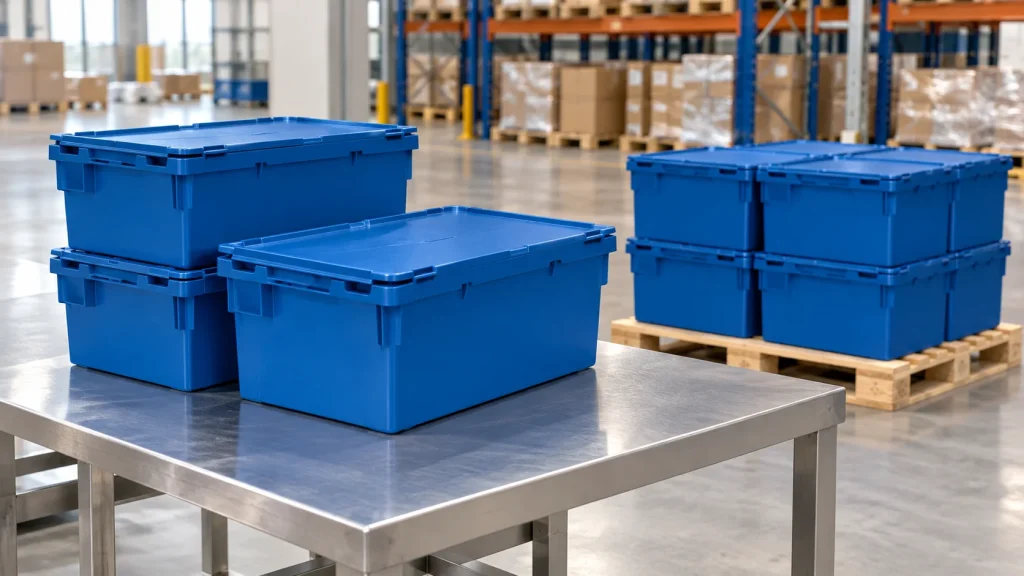
Buying plastic crates in volume is not simply a matter of choosing a colour and asking for a price. The crate has to suit the goods, the handling route and the return process. A supplier also needs enough information to recommend the right structure. This checklist helps a buyer prepare that discussion before a sample request or bulk order.
Start with the job the crate must do
Describe the goods before comparing crate models. Include the item type, whether the goods are loose or packed, and whether the crate must protect the contents from dust, drainage, moisture or contact with other items. A crate used for parts picking has a different brief from one used for wet produce, returnable distribution or a production line.
It also helps to state how the crate moves. Explain whether staff will carry it, place it on shelves, move it by trolley, load it onto a pallet, or send it through a repeated return route. These details let the supplier narrow the choice instead of treating every plastic crate as interchangeable.
Choose the structure before asking for a quote
The most useful starting point is the crate structure. Vented and solid plastic crates answer different handling needs. Vented walls can suit goods that need airflow or drainage. Solid walls can suit smaller parts or goods that need more side containment. The final choice depends on the goods and the operating environment.
Empty-return planning matters as well. If the route sends many empty crates back, compare stackable and nestable crate designs early in the process. A buyer should explain what happens when crates are loaded, empty and stored. That is more useful than asking a supplier for a generic “space-saving” crate.
Give the supplier the dimensions that matter
Send the outside space available for the crate, then explain the usable space the goods require. If the crate must work with a shelf, trolley, pallet footprint, packing line or vehicle layout, include those constraints in the enquiry. A simple sketch, packing photo or current container measurement can prevent a sample from being evaluated against the wrong space.
Do not assume that two crates with similar outside dimensions provide the same internal space or handling fit. Ask the supplier to confirm the dimensions for the proposed model, then check them against the actual goods and the existing handling equipment.
Ask for a sample that reflects the real use
A sample review is most useful when it follows the real handling route. Put representative goods inside the crate. Check how people grasp it, how it sits when loaded, and whether it works with the equipment used on site. If the crate will be reused, look at the complete cycle rather than only the first loading.
Buyers should also decide what needs approval before production. That can include the chosen structure, colour, identification, packing method, and any project-specific marking. Confirm the approved reference with the supplier in writing so the bulk order follows the reviewed configuration.
Check how the crate will be handled
List the handling equipment and the contact points that matter. This may include a worker’s carry, a conveyor, shelf support, trolley, pallet or vehicle loading arrangement. If the crate will be stacked, state whether the review concerns loaded crates, empty crates or both. The supplier can then assess the requested model against the actual handling route.
For a warehouse that needs standard footprints for smaller items, the EU Boxes range is a useful category to compare. For a broader route through current structures and applications, start with the Plastic Crates category and then open the relevant model pages.
Make the bulk-order details clear
A productive quotation request states the estimated quantity, delivery destination, preferred order timing and whether the order will be a one-time purchase or a repeat programme. It should also identify the contact person who will review the sample or technical reply. This avoids a long exchange in which the supplier has product questions but no operating context.
If the crate will carry a product label, colour reference or identification mark, provide the artwork or instructions only after the base model is agreed. Keep the model decision separate from the marking decision. That makes it easier to check what is being approved at each stage.
Use product pages for model-specific confirmation
Once the operating brief is ready, compare the available models rather than relying on a general description. For example, the Stackable Nestable Crate for Logistics page is one route to a current model. Its page is the right place to review the model details. The category and this checklist help a buyer ask better questions, but they do not replace confirmation for the selected item.
A short enquiry checklist
- What goods will the crate hold, and how are they packed?
- Which wall and base structure best suits the handling and containment need?
- What external space and usable internal space are available?
- How will loaded and empty crates move, stack and return?
- What should the sample prove before a bulk order is approved?
- What quantity, delivery destination and timing should the quotation cover?
Prepare the enquiry before comparing suppliers
A clear enquiry gives a plastic crate manufacturer a practical basis for recommending a current model or asking the right follow-up questions. It also gives the buyer a better way to compare replies. When the goods, handling route, space limits and sample checks are documented, the final choice is less likely to depend on a catalogue image alone.
If you are ready to discuss a crate requirement, contact Zhenghao with the application details and the product or category pages you are considering.