
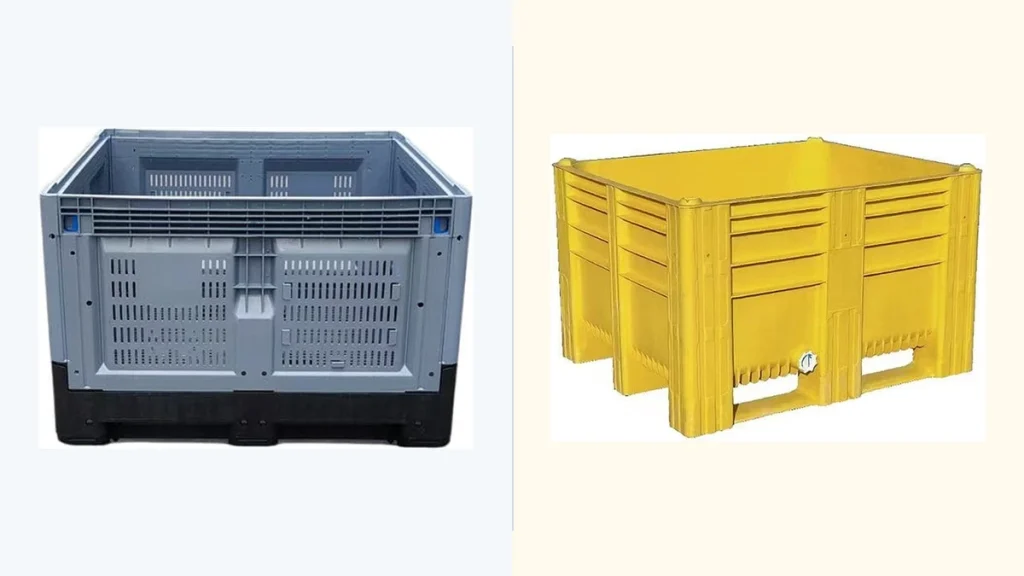
Choosing between a foldable and a one-piece plastic pallet box usually comes down to what happens before, during, and after the box carries a load. Both structures can support reusable bulk handling, but they solve different operating problems.
A foldable box is useful when empty containers must be stored or returned through a closed-loop supply chain. A one-piece box keeps a fixed shape and is often easier to manage when the operation values rigid walls, straightforward cleaning, and fewer moving parts. The right answer depends on the cargo, the handling equipment, and whether empty return transport is part of the cost.
Zhenghao supplies several types of plastic pallet boxes. Buyers can use the comparison below to narrow the choice before reviewing a specific model.
Start with the empty return journey
The loaded trip gets most of the attention during purchasing, but the empty trip can change the economics of a reusable packaging system.
When boxes return empty to a factory, farm, warehouse, or distribution center, a collapsible structure can reduce the space taken by the side walls. That makes foldable pallet boxes worth considering for regular return routes, seasonal storage, and sites with limited space for empty packaging.
If the boxes normally stay at one location, move between nearby work areas, or return infrequently, the benefit of folding may be less important. A rigid box can be the simpler choice when empty-volume reduction has little effect on transport or storage.
Before comparing purchase prices, map the full route. Note where empty boxes wait, how often they return, who folds and opens them, and whether operators have enough room to do that work safely.
What changes with a foldable pallet box
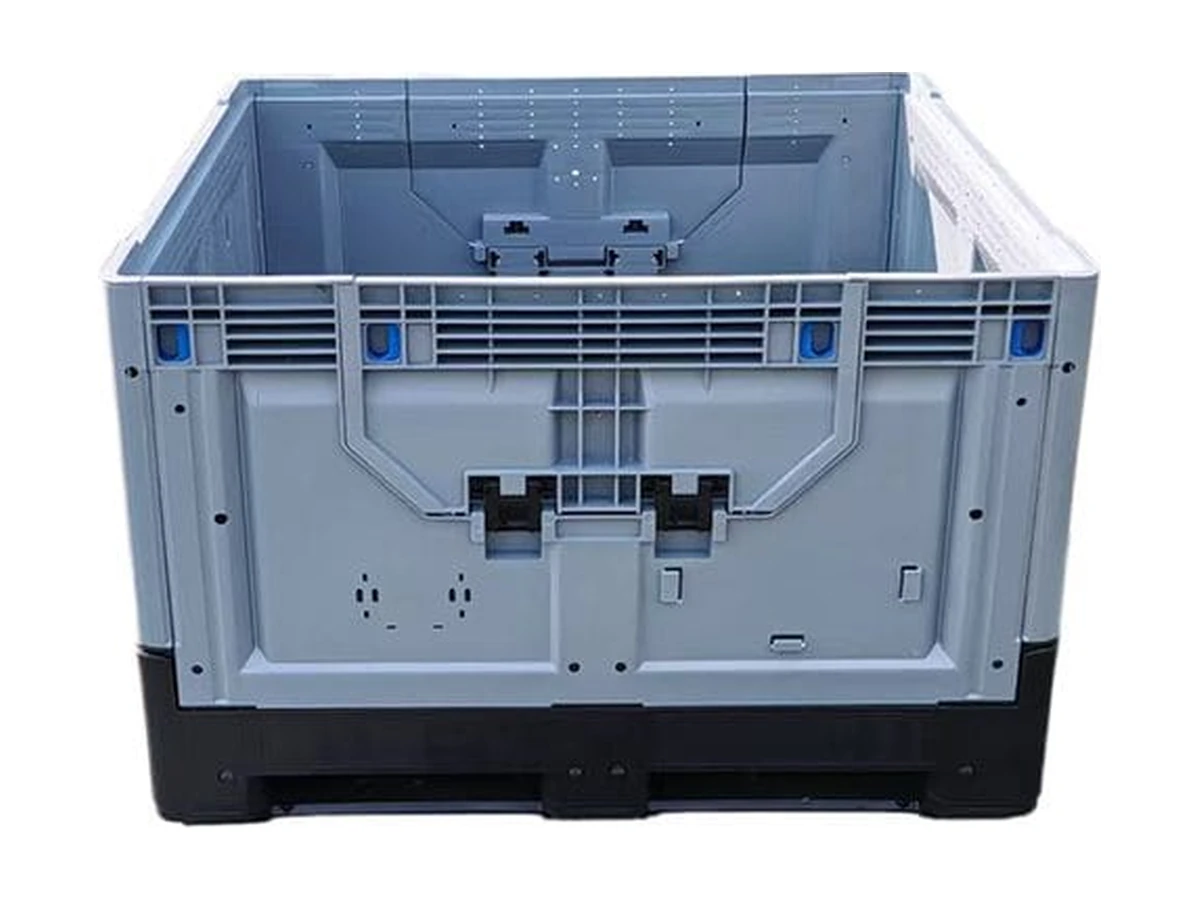
A foldable pallet box has side walls that collapse onto the pallet base. Some models also have drop doors that give operators access to the contents without removing the full wall or unloading only from the top.
This structure suits operations where:
- empty boxes make regular return trips;
- warehouse space for unused containers is limited;
- seasonal peaks create a large temporary pool of packaging;
- side access helps workers pick or unload bulky contents;
- the business already manages a reusable packaging loop.
The folding mechanism also adds inspection points. Buyers should ask how the wall locks, hinges, drop doors, and replaceable parts are checked. Cleaning routines should include joints and contact areas, especially when the box carries loose material or products that leave residue.
For an example with side access, review the folding plastic pallet box with a drop door. Its product page should remain the source for model dimensions, weight, load data, and available options.
What changes with a one-piece pallet box
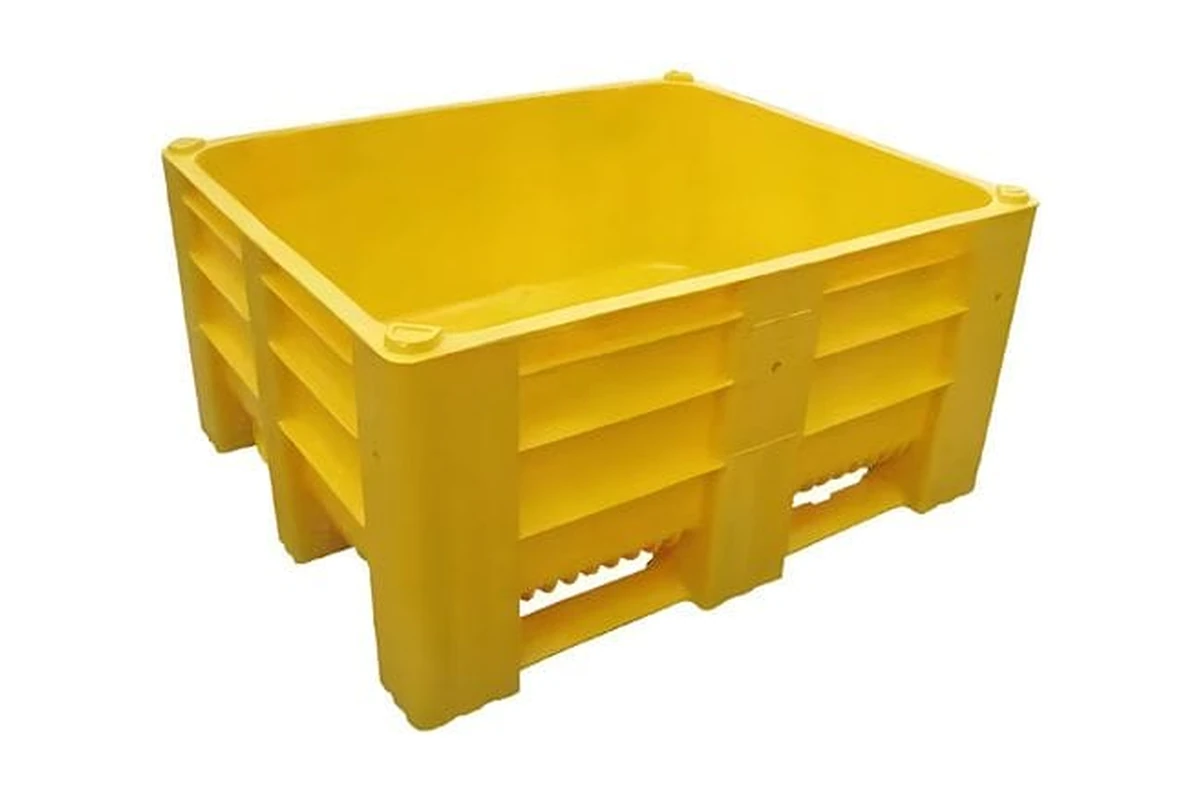
A one-piece pallet box has fixed walls joined to an integrated pallet base. It does not collapse for the empty return journey, so each empty box continues to occupy its full external volume.
The fixed structure is useful when:
- the container stays in a plant, warehouse, or local distribution network;
- operators want a box that is ready to use without opening or locking walls;
- the cargo benefits from rigid side protection;
- smooth internal surfaces and routine cleaning are important;
- the operation wants fewer hinges, latches, and moving components to inspect.
One-piece boxes are available with different wall designs. Solid walls can help contain small parts, loose goods, or products that should not pass through ventilation openings. Ventilated walls may suit applications that need airflow. These are model-level choices, not features shared by every rigid pallet box.
The one-piece heavy-duty pallet box is one example of a fixed-wall structure. Buyers should use its product page, drawings, and quotation documents to confirm the actual specification.
A practical comparison
| Buying factor | Foldable pallet box | One-piece pallet box |
|---|---|---|
| Empty return transport | Collapsible walls can reduce empty container volume | Fixed walls occupy the full box volume |
| Empty warehouse storage | Useful where unused boxes must be compacted | Requires space for the complete rigid box |
| Setup before filling | Walls must be opened and locked correctly | Ready to fill without unfolding walls |
| Side access | Drop-door options are available on selected models | Access design depends on the selected rigid model |
| Cleaning | Hinges, joints, and locking areas need attention | Fixed surfaces can simplify the cleaning route |
| Maintenance | Folding parts and locks should be inspected | Fewer moving structural parts to inspect |
| Structure choice | Best evaluated around the return loop | Best evaluated around rigid handling and on-site use |
This table describes structural differences, not model performance. It does not replace a check of the actual load, stacking condition, forklift entry, material grade, or accessories.
Check the handling process before choosing
Loading and unloading
Think about how workers reach the cargo. Top loading may be simple for produce, loose materials, or parts placed by a tipper or conveyor. Manual picking from a tall box can be harder. A selected foldable model with a drop door may improve access, but the door position must match the work height and the contents.
Forklift and pallet-jack movement
Confirm the equipment used at every site. Fork entry, floor clearance, turning space, and the condition of the pallet base affect day-to-day handling. Do not assume that every pallet box works with every pallet jack or racking system.
Loaded stacking
Stacking depends on the model, the load, the floor, and the operating method. Ask for the permitted loaded stacking condition and check how the upper box locates on the one below. A general category description is not enough for this decision.
Cleaning and drainage
Review the cargo and cleaning method together. Solid walls, ventilation openings, drain ports, hinges, and drop doors change where water or residue can collect. If the box is used for food, agriculture, chemicals, or wet processing, state the cleaning and contact requirements before selecting a model.
Damage and repair planning
A returnable packaging system needs an inspection routine. Foldable boxes may need checks around moving parts and wall locks. One-piece boxes still need inspection around the pallet base, fork entries, walls, and stacking points. Ask whether the selected model has replaceable parts and how damaged containers should be removed from service.
Which structure fits common use cases?
For a closed-loop route with frequent empty returns, a foldable box often deserves the first review. The same applies when a farm, processor, or factory needs to store many empty containers between production cycles.
For plant circulation, fixed warehouse storage, or operations that want a rigid container ready for immediate use, a one-piece pallet box may be the more direct option.
The cargo can change that answer. Bulky components may need side access. Small loose parts may need solid containment. Fresh produce may require airflow. Wet goods may require drainage. There is no useful category-wide answer without checking the selected model and its working conditions.
Information to send before requesting a recommendation
A supplier can narrow the range more accurately when the inquiry includes:
- cargo type and how it is packed;
- external and usable internal size limits;
- loaded weight per box;
- required stacking condition;
- forklift or pallet-jack entry requirement;
- return distance and number of empty return cycles;
- loading and unloading method;
- solid, ventilated, lid, drainage, or drop-door needs;
- cleaning method and use environment;
- estimated quantity and destination market.
Photos of the cargo, handling equipment, and storage area can also prevent a poor structural match. For projects that are still at the comparison stage, contact Zhenghao with the operating details rather than choosing only from an external size or a headline load figure.
The purpose of the comparison is simple: use a foldable pallet box when empty-volume reduction adds measurable value to the return loop, and use a one-piece pallet box when a fixed, ready-to-use structure better fits the daily handling process. Confirm the final choice against the actual product specification before ordering.