
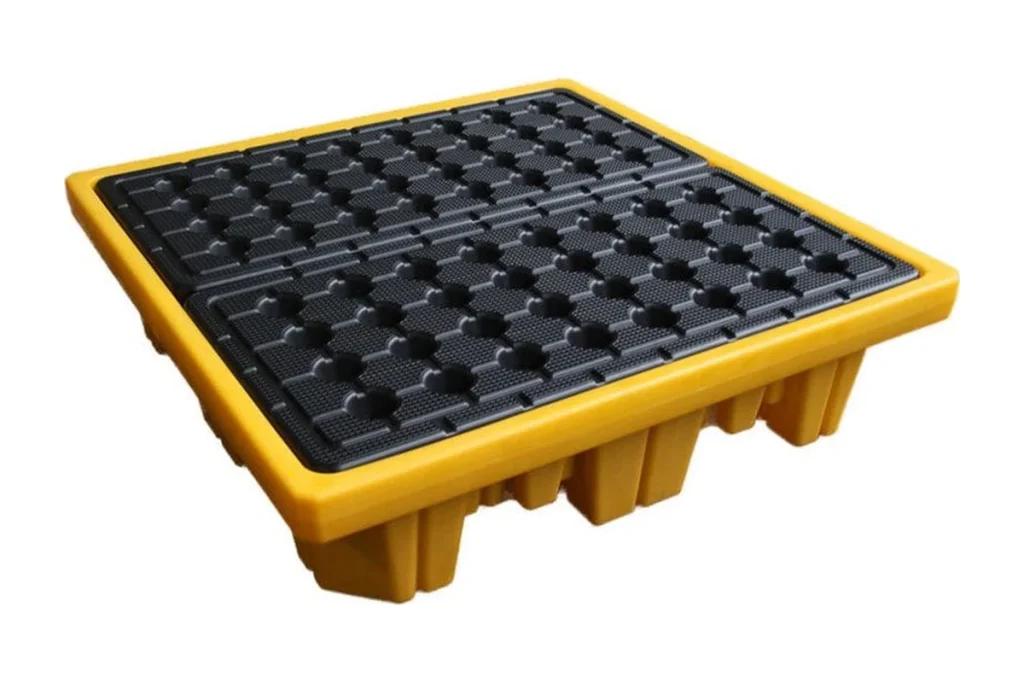
A drum spill pallet needs regular inspection and cleaning if it is to remain useful in day-to-day storage. A quick glance at the grate is not enough. The sump, pallet body, drain area and contact surfaces all need attention, especially after a leak or a change in the stored liquid.
The exact procedure should follow the product instructions, the liquid information and the rules at the site. The steps below help buyers and operators build a practical checklist without assuming that every model or chemical can be handled in the same way.
Check the stored liquid before touching the pallet
Identify what has leaked or collected in the sump before beginning work. Review the relevant safety information and the site’s handling procedure. The liquid may require specific personal protective equipment, tools, containers or disposal arrangements.
Do not mix an unknown residue with a cleaning product. If the liquid cannot be identified, isolate the area and follow the site’s escalation procedure. Product material alone does not prove compatibility with every substance.
Remove drums according to the handling plan
Clear access around the spill pallet and decide how the drums will be moved. Check the condition of each drum before lifting or repositioning it. A damaged container may need separate handling.
Do not move a loaded spill pallet unless the instructions for that exact model allow it. Fork openings, support points and load limits vary. If the pallet must remain in place, arrange the work so staff can reach the grate and sump without creating another handling risk.
Inspect the grate and pallet body
Once the drums are removed, inspect the grate for cracks, deformation, loose sections and blocked openings. Check that it sits correctly on its supports. A grate that rocks or no longer fits should be reviewed before the pallet returns to service.
Examine the pallet body, corners, feet, fork-entry areas and sump walls. Look for impact damage, stress marks, cuts, distortion and signs of chemical attack. Pay attention to areas that may have contacted forklift tines or other handling equipment.
Check the sump, drain and fittings
Remove collected liquid using the approved site procedure. The sump should then be checked for residue, sediment and objects that could obstruct inspection. If the model has a drain, inspect the plug, cap, thread and sealing area.
A drain should not be opened simply because it is convenient. The liquid, collection method and local site rules determine how the contents should be removed. Confirm whether replacement seals or drain components are available for the selected model.
Choose a cleaning method that suits the residue
Select cleaning agents and tools only after checking the residue and the materials used in the pallet and grate. Avoid methods that may damage the surface, change the shape or force contamination into joints and recesses.
Clean all reachable sump surfaces and both sides of a removable grate. Rinse only when the site procedure permits it and when the rinse liquid can be collected correctly. Do not allow contaminated wash water to enter an uncontrolled drain.
Dry and reassemble the unit
After cleaning, allow the components to dry and inspect them again under good lighting. Refit the drain plug and any removable parts according to the product instructions. Place the grate back on its supports and confirm that it is stable.
Check the surrounding floor before returning drums to the area. Cleaning the pallet while leaving residue underneath or around it does not complete the job.
Record damage and decide whether the pallet can return to service
A simple inspection record makes recurring damage easier to spot. Record the date, product location, stored liquid, condition found, cleaning method and any parts replaced. Photographs can help when the supplier needs to review damage.
Do not improvise a structural repair or continue using a unit when its condition is uncertain. Contact the supplier with the model, photographs and a clear description of the damage. The decision should be based on the exact product rather than a similar-looking spill pallet.
Set the inspection frequency around actual use
There is no single interval that suits every operation. Inspection frequency depends on the liquid, drum movements, exposure, handling activity and site procedure. A pallet in an active transfer area may need attention more often than one used for stable indoor storage.
Useful inspection points include before placing drums, after any spill, after forklift contact, after cleaning and before changing to another liquid. The site can add these checks to its existing storage and housekeeping routine.
What buyers should confirm before ordering
Maintenance starts with product selection. Before ordering, ask about:
- the pallet and grate materials;
- how the grate is removed;
- whether a drain is included or optional;
- approved handling methods;
- replacement parts and inspection guidance;
- the information needed for a compatibility review.
Browse Zhenghao’s drum spill pallet range to compare available models. For help preparing a purchasing brief, read what buyers should confirm before ordering a drum spill pallet. You can also send the liquid, drum and handling details to Zhenghao for a model-specific review.