
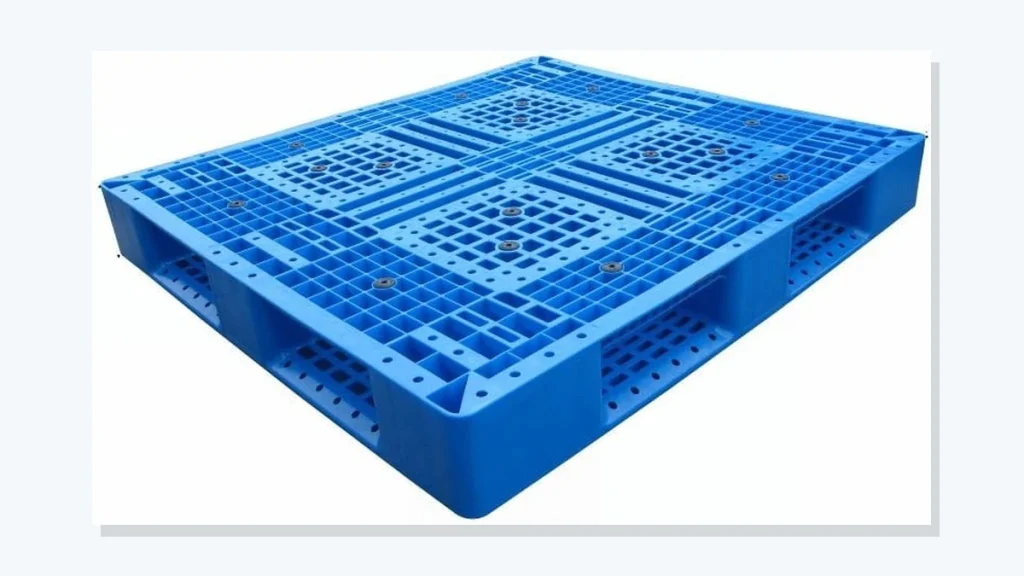
HDPE and PP can both be used to make plastic pallets. Neither acronym tells you whether a pallet is rackable, what load it can carry, or whether it suits a particular temperature or cleaning process. Those answers depend on the exact resin grade, the pallet design, any reinforcement, and the conditions used for testing.
Zhenghao can discuss both HDPE and PP options. The sensible way to choose between them is to start with a real pallet model and a clear operating brief, then confirm the final material in the quotation and specification.
HDPE and PP: the short answer
At a broad resin level, HDPE is often associated with toughness and low-temperature service. PP is often associated with stiffness and resistance to higher temperatures. These are tendencies, not finished-pallet specifications. Polymer grade, copolymer content, additives, recycled content, wall sections and moulded structure all affect the result.
This is why a generic statement such as “HDPE is always stronger” or “PP is always lighter” is not a safe buying rule. Two pallets made from the same resin can perform differently because their decks, runners, ribs and reinforcement are different. A PP impact copolymer may also behave differently from a PP homopolymer. The supplier must match the resin and the pallet structure to the job.
Why fixed material comparison numbers can mislead buyers
Material comparison pages often publish one temperature range, one weight difference or one cost claim for every HDPE and PP pallet. That shortcut creates false confidence. A resin data sheet describes a particular grade under stated test conditions. It does not automatically describe a complete pallet in a warehouse.
The same warning applies to load ratings. Static, dynamic and racking loads belong to the exact pallet model and test setup. They cannot be copied from another pallet simply because the material or outside dimensions match.

Choose the pallet structure before comparing resin
Start with the cargo footprint, packed weight and handling method. Then identify a suitable structure in the plastic pallets range. A nestable export pallet, a three-runner warehouse pallet and a double-deck pallet solve different handling problems even when their outside dimensions are similar.
For each candidate model, confirm the deck type, bottom structure, fork entry, reinforcement options and intended storage method. Only then does an HDPE or PP comparison become useful.
Five operating questions to answer
1. What temperature will the pallet actually experience?
Give the supplier the lowest and highest operating temperatures, not just the words “cold storage” or “hot cleaning.” Include the duration of exposure and whether the pallet will be struck, dropped or moved while cold. Ask for information that applies to the proposed resin grade and pallet model.
2. How will the pallet be handled?
Forklift movement, pallet-jack use, conveyors, floor stacking and beam racking place different demands on a pallet. Material choice cannot correct an unsuitable base structure. If the pallet will be rack supported, obtain a model-specific racking value and the test conditions behind it.
3. What chemicals or cleaning agents are present?
Both HDPE and PP are used in industrial environments, but chemical compatibility still depends on the substance, concentration, temperature and contact time. Provide the actual cleaning agent or chemical name. Do not rely on a broad claim that a plastic is “chemical resistant.”
4. Is the pallet for one-way shipment or repeated use?
A one-way export project may put more weight on unit cost, tare weight and container planning. A closed-loop project also needs repeat handling, cleaning, repair and loss rates considered. Compare the complete operating cost rather than assuming one resin is always cheaper.
5. Are material declarations required?
Food, pharmaceutical and regulated operations may require specific documents or agreed material content. State the required declaration before ordering. A colour or a general “food grade” description is not a substitute for the documentation your project needs.
Where HDPE may be considered
HDPE is often considered when a buyer is concerned about impact, moisture and lower-temperature handling. That does not mean every HDPE pallet suits freezer use or heavy duty work. The exact grade, pallet geometry and handling conditions still control the decision.
For cold-chain or food handling, use the operating details in the food and beverage pallet guide as a starting checklist, then verify the proposed model.
Where PP may be considered
PP is often considered when stiffness or higher service temperature is part of the brief. PP is available in different grades, including formulations designed to change impact performance. A generic PP label therefore does not prove that a finished pallet can tolerate a particular temperature, load or cleaning cycle.
Some pallet models or projects may support either PP or HDPE. Availability is model-dependent. Changing the resin can also change pallet performance, so the load and temperature information should be confirmed again for the selected version.
What to request from a plastic pallet supplier
A useful quotation should identify the proposed pallet model and the agreed material. It should also state the model-specific dimensions and load information needed for the job. Where temperature, chemicals, recycled content or a declaration matters, add that requirement in writing.
- Cargo dimensions, packed weight and load distribution
- Forklift, pallet jack, conveyor or manual handling method
- Floor stacking, racking or other storage condition
- Lowest and highest operating temperature
- Cleaning process and chemical exposure
- One-way shipment or expected reuse cycle
- Required material declaration, colour or reinforcement
- Order quantity and destination
If footprint is still undecided, review the plastic pallet sizes guide before comparing materials.
Common questions from buyers
Is HDPE always better than PP for plastic pallets?
No. Both materials are available options. Suitability depends on the resin grade, pallet design, handling method, temperature and other operating conditions.
Can I use a material name to compare load capacity?
No. Load capacity belongs to the exact pallet model and test conditions. Compare static, dynamic and racking data separately, and do not transfer a rating from another product.
Can the same pallet be made in PP or HDPE?
Some models or projects may support both materials, while others may not. Confirm availability and performance for the selected model in the supplier’s written quotation.
What information should I send for a recommendation?
Send the cargo size and weight, handling equipment, storage method, temperature range, chemical exposure, cleaning process, reuse plan, quantity and destination. These details allow a supplier to compare real models instead of making a recommendation from the material acronym alone.
Confirm the material for the real pallet model
Use HDPE and PP as part of the selection process, not as the whole decision. Send Zhenghao your pallet requirements so the proposed structure, material and model-specific data can be checked together.