
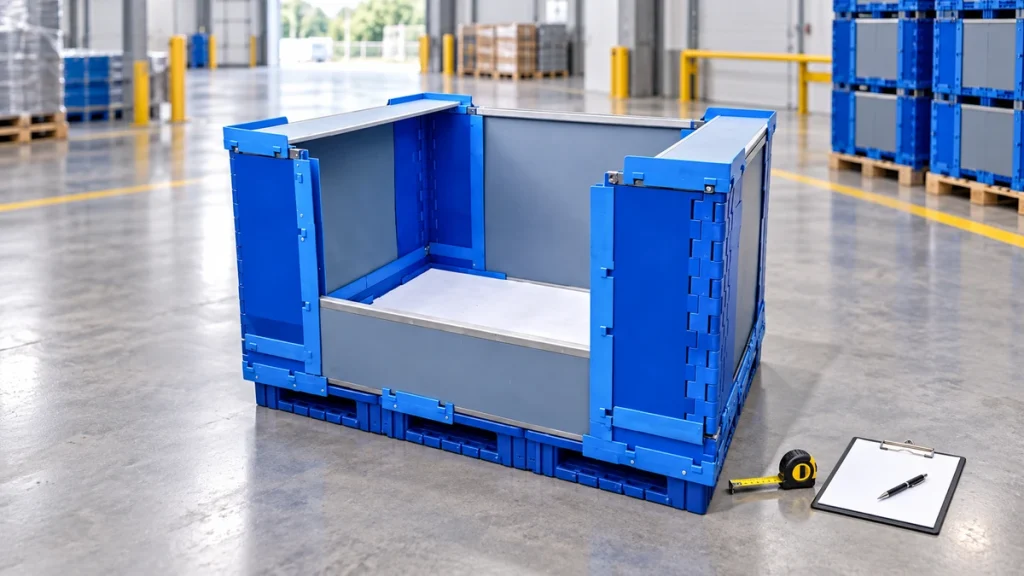
A custom pallet box quote starts with more than an outside length and width. The supplier needs to understand what the container will hold, how it will move, and what happens after it is empty. A short, complete brief usually produces a more useful first recommendation than a list of isolated dimensions.
This checklist helps buyers prepare an enquiry without treating a product page as a universal specification. Use it to organise the facts that affect box selection, then ask the supplier to confirm the final model and configuration.
Start with the goods, not the container
Describe the actual items that will go into the pallet box. Include their form, whether they are loose or packed, and whether they need dividers, bags, liners or other internal protection. A container for irregular components has different practical needs from one for cartons or evenly sized parts.
Photos of the goods and the current packing method are useful. They show where contact occurs and whether anything may shift inside the container. The pallet boxes category is a good starting point for comparing product families, but the goods still determine which route deserves a closer look.
Describe the usable space you need
State the space required for the finished load, not only the size of one item. Account for any liner, divider, protective sheet or empty space needed for safe placement and removal. If the goods must be accessed by hand, explain where that access is needed.
Do not assume that two containers with a similar outside footprint provide the same usable internal space. Wall construction, base form and any accessories can change the available area. A supplier can review the right details once the intended packing layout is clear.
Explain how the load is built
Say whether the items are placed in layers, in bags, in cartons, on trays or as loose parts. Note if the pack pattern changes between suppliers or seasons. This lets the discussion focus on the real load, rather than an idealised full rectangle.
When the goods need side protection but do not require an enclosed rigid box for every move, a plastic sleeve box may be worth comparing. If the project needs a fixed-wall format, review the relevant one-piece pallet box options instead. The final choice should follow the actual packing process.
Map the handling route
List each point where the loaded box will be lifted, moved, staged or unloaded. Include the equipment used, the available approach space and whether people need to reach into the container. A box can suit one part of a route and still be inconvenient at another.
Also mention whether the container moves within one facility or travels between sites. The destination, transport method and loading pattern can affect the quotation discussion without establishing a universal handling claim for every model.
Include the empty return journey
Empty return is often the first item missing from an enquiry. Tell the supplier how many empty boxes return at a time, how they are stored, and whether return transport costs matter to the project. This information can guide the conversation toward the right structure.
For returnable operations, compare the empty-state process as carefully as the loaded-state process. The foldable pallet boxes category provides one route to explore when return volume is part of the requirement.
State the operating environment clearly
Describe where the box will be used and what it may contact. A simple note about indoor or outdoor use is a starting point, but it does not explain wash-down routines, dust, moisture, temperature changes or the type of goods carried. Share the conditions that are relevant to your operation.
Do not convert a general environment description into a material, hygiene, chemical-resistance or certification claim. Those points depend on the selected product and need separate confirmation.
Separate must-haves from preferences
Make two short lists. The first should contain requirements that cannot change, such as the packing layout, handling route or return process. The second can contain preferences, such as colour, identification method or the way the box is presented at the work area.
This distinction keeps the quote request practical. It also helps the supplier explain which parts of the request are model-specific and which options can be considered after the basic container fit is confirmed.
Use related pages as references, not substitutes
Related product pages can help you explain the type of container under consideration. For example, a modular pallet box system may be a useful reference when describing a project. It is not a substitute for confirming the final specification for your load and handling conditions.
If you are still deciding whether a crate or a pallet box better fits the process, read Plastic Crate vs Pallet Box: Which Fits Your Handling Process? before making the enquiry.
Send a complete enquiry
A clear request includes the goods, packing layout, space needed, handling route, storage and return conditions, operating environment, destination and approximate order requirement. Add photos or drawings where they clarify the load.
Send Zhenghao the information that affects your operation, then request a pallet box recommendation. The supplier can use the brief to review suitable options and confirm the points that need model-specific verification.