
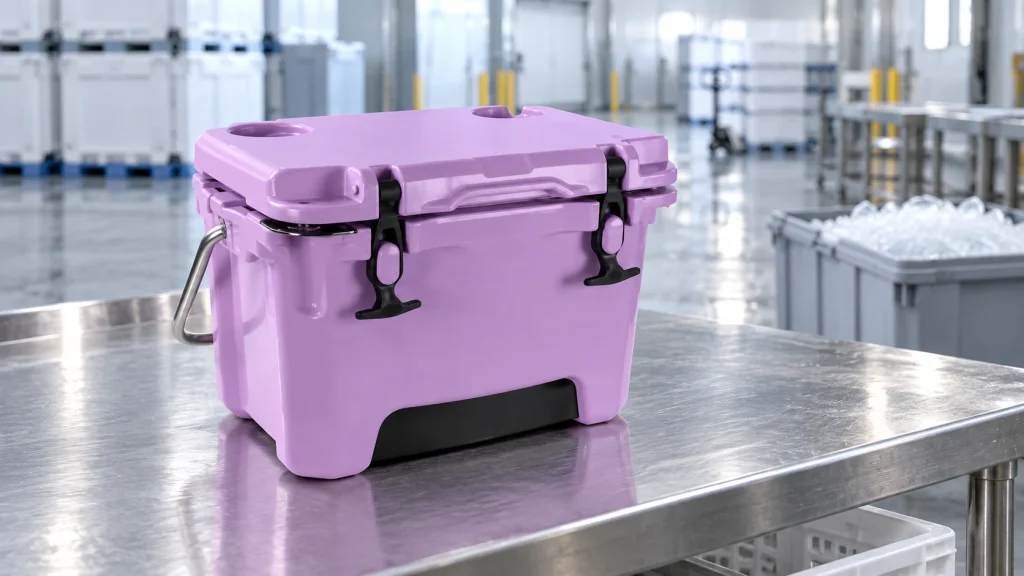
Moving fish or seafood through a chilled route involves more than choosing a box that looks large enough. The product, cooling method, handling points and delivery route must work together. An insulated box can be part of that plan, but the final choice should follow the conditions of the shipment rather than a generic capacity claim.
This checklist helps a buyer prepare a clear enquiry before comparing models in Zhenghao’s Insulated Fish Boxes range. It does not replace the specifications for an individual product. Confirm each proposed model against the actual load, cooling method and route before ordering.
Start with the product and the route
Describe what will be inside the box first. Fresh fish, frozen seafood and other chilled goods can create different packing and handling requirements. State the product form, the approximate packed weight per box, the expected dispatch temperature and the longest expected route. If there are transfer points, waiting periods or mixed transport stages, include them in the enquiry.
A supplier needs this operating picture before recommending a box. A simple statement such as “seafood transport” leaves too much open. A useful brief explains where the goods are packed, how long they travel, what happens during handover and how the empty boxes return.
Choose the internal space before the outside footprint
Buyers often begin with the space available on a vehicle or in a cold room. That is important, but usable internal space comes first. Confirm the dimensions of the packed product, ice or other cooling medium, liners and any separation needed inside the box. Then compare those needs with the published internal and external dimensions of each shortlisted model.
Do not treat a nominal volume as proof that every pack pattern will fit. The lid, wall thickness, cooling material and packing method can all affect the usable arrangement. Zhenghao’s 1000L Fishery Insulation Boxes page is a model-specific reference point, while the final selection still needs a full packing check.
Explain the cooling method clearly
Tell the supplier how the shipment will be cooled. Describe whether the operation uses ice, gel packs, refrigerated vehicles, a controlled cold room or another method. Also state whether the cooling material sits inside the box, surrounds a sealed pack or is handled separately. These details affect the space plan and the practical handling routine.
It is better to ask for confirmation against a defined route than to request a general promise about temperature performance. Transport duration, loading conditions and repeated opening can change the result. The buyer should set the project requirements, then check whether the selected box and packing plan are suitable.
Check the lid, drainage and cleaning routine
A closed route may need a particular lid arrangement. A wet packing process may need an agreed drainage approach. These are model and process questions, so include them in the enquiry rather than assuming every insulated box has the same configuration. Specify whether the box will hold loose ice, sealed product packs, meltwater or a liner system.
Also describe the return and cleaning process. State whether boxes are washed at the destination, returned empty, stored between cycles or handled by a third party. This helps the supplier discuss the right model details without turning a general category description into an unsupported product claim.
Plan the handling points
List every point at which the box is lifted, moved, stacked or transferred. Include manual handling, carts, forklifts, pallet movement and vehicle loading where relevant. The selected model must match the actual equipment and workflow. Do not assume a feature applies across a whole product family.
For larger insulated containers, compare the product page, such as the Seafood Special Insulation Pallet Box, with the intended handling process. Confirm exact dimensions, weight, lid details and any handling configuration directly for the proposed model.
Separate a trial shipment from a repeat programme
A one-off shipment and a reusable distribution loop need different information. For a trial, the buyer may focus on a defined route and packing arrangement. For a repeat programme, empty return space, cleaning, storage and loss control can matter just as much as the outbound journey.
State the expected order quantity, shipment frequency and whether the boxes will circulate between fixed locations. This gives the supplier a clearer basis for discussing model options and packing. It also avoids choosing a box solely from a photograph or a headline capacity.
Prepare a short packing and export brief
If the boxes will be exported, include the destination, container or vehicle type, packing method and desired shipment quantity. Ask the supplier to confirm the packing proposal for the exact model, including any lid or accessory arrangement. Do not use a container-loading figure from another product as a substitute for the final quotation.
For broader container options, the Pallet Boxes category can help buyers compare different structures. Insulated fish boxes remain a separate product decision because the route and cooling plan are central to the enquiry.
Ask for the documents that matter to your project
Different buyers need different documentation. Before requesting a quote, list any test records, material information, drawings, sample requirements or destination-specific paperwork required by your own customer or authority. Do not assume that a general product description confirms a particular approval, material grade or operating limit.
Giving this list early makes the quotation process more useful. It allows the supplier to identify what can be confirmed for the selected model and what still needs a project-specific check.
Use this enquiry checklist
- Product type and packed weight per box
- Cooling method and expected route duration
- Internal packing pattern, liner and cooling-material space
- Required lid, drainage and cleaning arrangement
- Handling equipment and transfer points
- Return cycle, storage and order quantity
- Destination, packing method and documents required for the project
Where to go next
Start by reviewing the available Insulated Fish Boxes and opening the product pages that fit the preliminary size and handling plan. If the project needs a different returnable container structure, see Plastic Crates for smaller handling units.
When the route, packing and handling details are ready, send Zhenghao an enquiry with the checklist above. The final recommendation should be based on the exact model and the real shipment conditions.