
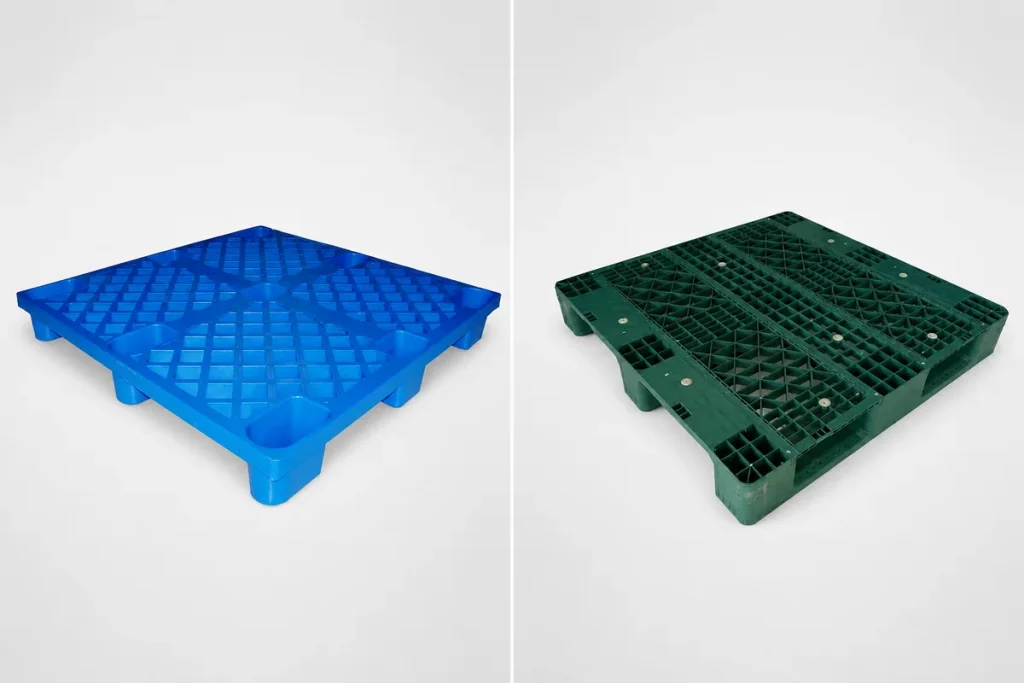
Plastic pallets can look similar in a product list while using very different construction methods. A one-piece pallet is molded as a single main structure. An assembled pallet joins molded sections with bolts or other mechanical fasteners. Neither method is automatically better. The right choice depends on the load, handling equipment, repair plan and operating environment.
What is a one-piece plastic pallet?
A one-piece plastic pallet comes out of the mold as an integrated structure. Nine-leg, three-runner and full-perimeter designs can all use this approach, so “one-piece” describes the construction method rather than the bottom layout.
The main advantage is simplicity. There are fewer joints to inspect, and the pallet arrives ready for use. This can suit operations that want a consistent pallet structure and do not plan to replace individual deck or base sections.
Buyers should still check the actual model rather than relying on the construction label. Deck style, bottom structure, entry arrangement and load ratings vary from one one-piece pallet to another. A light nine-leg export pallet and a reinforced rackable pallet may both be molded in one piece, but they serve different jobs.
What is an assembled plastic pallet?
An assembled pallet uses separate molded components that are joined after production. The connection method and replaceable parts depend on the model. Some designs allow a damaged section to be serviced instead of replacing the whole pallet. Others use assembly to combine a specific deck and runner configuration.
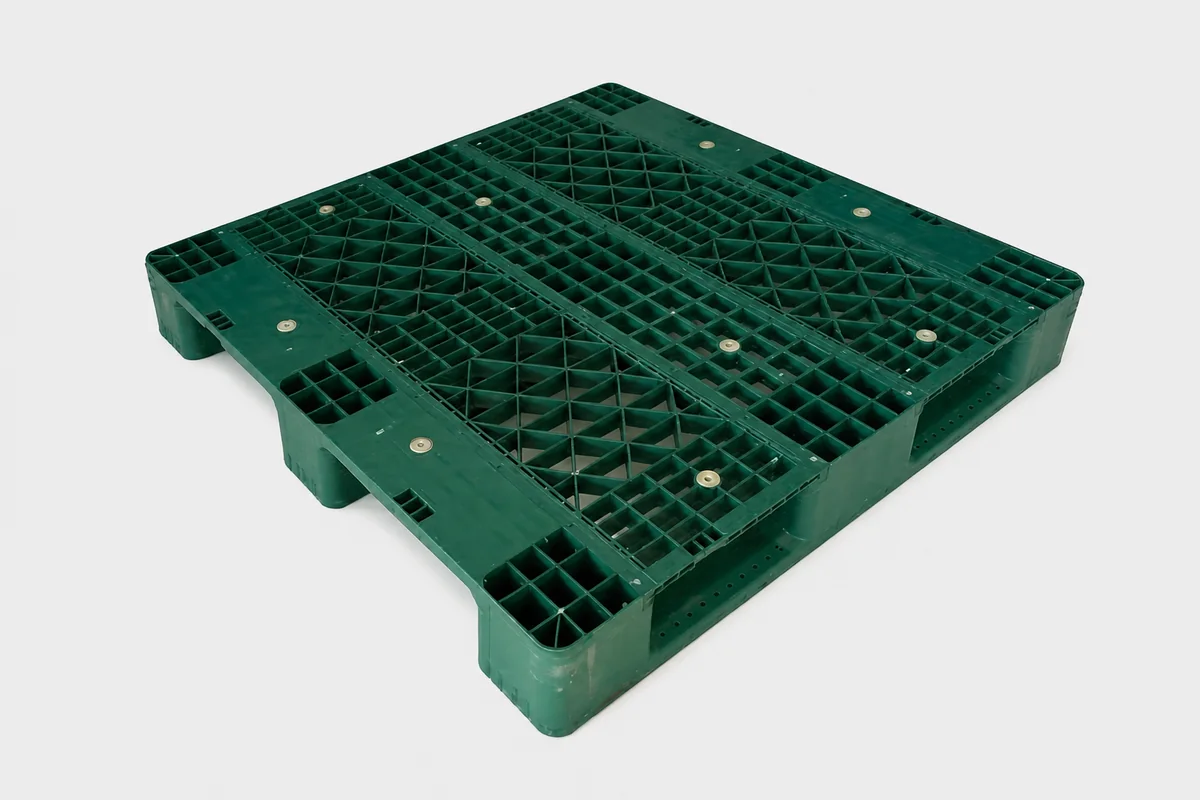
Assembly does not by itself define load capacity. The joint design, reinforcement, material, pallet geometry and tested load conditions all matter. For example, Zhenghao’s assembled three-runner grid deck pallet uses a bolted structure, while the reinforced three-runner pallet is a different model with its own configuration. Buyers should compare the published specification for the exact product under review.
Compare the handling conditions first
Start with the actual movement of the loaded pallet. Confirm whether forklifts, pallet jacks, conveyors or rack systems will be used. Check the required entry arrangement and ask for load data that matches the intended condition. Static, dynamic and racking loads describe different situations and should not be treated as interchangeable.
Automation compatibility also needs a model-level check. A consistent bottom surface, dimensional tolerance and runner geometry may matter more to a conveyor than whether the pallet is one-piece or assembled. Share the conveyor, transfer and sensor requirements before ordering.
Think about damage and maintenance
In a closed-loop operation, repairability can affect lifetime cost. An assembled design may be useful when its deck or runner sections can be replaced under a documented repair process. That benefit only applies when spare parts, tools and inspection procedures are available.
A one-piece design removes those assembly joints, but damage to the main body may require replacement of the complete pallet. The practical comparison is therefore not “repairable versus durable.” Buyers should compare expected impact points, inspection frequency, repair capability and the cost of taking a pallet out of service.
Cleaning and contamination control
Cleaning performance depends on the real surface and joint design. Flat decks, grid decks, drainage paths, cavities and fasteners all change how a pallet can be washed and inspected. A one-piece structure may reduce connection points, while an assembled design can still be suitable when its joints are accessible and the cleaning method is appropriate.
Do not assume that every pallet of either type meets a particular hygiene standard. Confirm the material, surface design and any required documentation for the application.
A practical buyer checklist
- Confirm the exact deck and bottom structure.
- Match load data to static, dynamic and racking use.
- Check forklift, pallet jack, conveyor and rack compatibility.
- Ask which parts can be replaced and how repairs are inspected.
- Review cleaning access, drainage and contamination risks.
- Compare total service cost rather than purchase price alone.
Which construction should you choose?
Choose a one-piece pallet when an integrated structure, simple inspection and ready-to-use construction fit the operation. Consider an assembled pallet when a particular modular configuration or documented part-replacement plan offers a practical advantage. The final decision should be based on the exact model and its verified specification.
Use the plastic pallets category to compare available structures. For help matching a pallet to your handling system, load condition and maintenance plan, send Zhenghao your project requirements.