
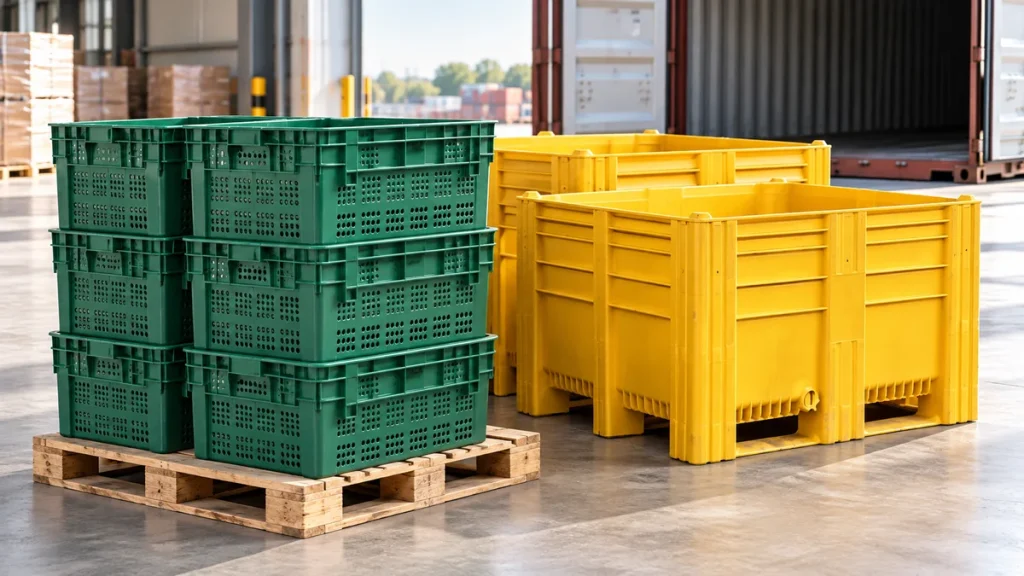
A mixed container order can be practical when one project needs both smaller handling containers and larger bulk units. It also needs a clearer packing brief than a single-product order. Before asking for a quotation, map the goods, the container types, the order quantities and the delivery destination. That gives the supplier enough information to review a workable loading plan for the selected models.
Start with the job each container needs to do
Plastic crates and pallet boxes solve different handling problems. A crate usually suits smaller parts, packed goods or order-picking units. A pallet box gives a larger base footprint for bulk handling, larger packs or returnable loads. The right mix starts with the goods themselves: their dimensions, packing condition, handling points and the quantity that moves together.
Use the Plastic Crates range to review smaller reusable containers, then compare the larger options in the Pallet Boxes range. The aim is not to force every item into one format. It is to select containers that match the way the goods are picked, stored and returned.
Separate the product list before planning the shipment
Prepare a simple list for every proposed item. Include the product page or model reference, required quantity, preferred colour if relevant, and whether any accessories or packaging are part of the request. Keep crate quantities and pallet-box quantities on separate lines. This makes it easier to check the total footprint and to avoid treating different product shapes as though they pack in the same way.
If the project includes several departments or destinations, record that too. A container plan for one warehouse may differ from a plan that is split across a receiving area, a production line and a return route.
Confirm how empty containers will travel back
Return transport often changes the most suitable mix. If empty volume matters, review the Foldable Pallet Boxes category alongside the product pages. A rigid unit may suit a different operating routine, so it should be assessed on its own handling and storage conditions. The One-Piece Pallet Boxes category is a useful route when buyers need to compare fixed-wall options.
Do not assume that a feature on one model applies to every crate or pallet box. Ask for confirmation against the exact model, the goods being moved and the expected empty-return arrangement.
Give the supplier the loading information that affects a mixed order
A supplier can only review a mixed-container shipment after receiving the complete list. Include the destination country or port, requested trade terms, order quantities, preferred packing method and any marking requirements. If a particular loading sequence matters, explain why. For example, a buyer may need some containers available first after unloading, or may need groups of products kept together for separate locations.
Final container loading depends on the selected products, their final packing data and the confirmed order. It should be checked as part of the quotation process rather than assumed from a product photo or a previous shipment.
Keep handling questions separate from the loading plan
Forklift access, pallet-jack use, manual picking, stack arrangement, cleaning and storage conditions are operating questions. They still matter, but they should be confirmed for each selected model. A mixed order can include products with different handling needs. The loading plan should not be used as proof that every product fits the same equipment or storage method.
For a broader comparison of the two container families, see Plastic Crate vs Pallet Box: Which Fits Your Handling Process?. Use that comparison to decide which type belongs in the project, then return to the category and product pages for the available models.
Build a quotation brief that can be checked
A useful brief is short but specific. It should state the goods, each required container type, approximate quantities, destination, preferred packing method and any timing requirement. Add photos, drawings or current packaging information when they explain the goods better than a written description. If the order is part of a returnable packaging program, describe the return route and where empty containers will be stored.
This gives the supplier a practical basis for checking product availability, packing options and a shipment proposal. It also reduces the risk of comparing a large pallet box and a small crate only by price when they will do different jobs after delivery.
Before you request a quote
- List every crate and pallet-box model or category you want reviewed.
- State the goods and how they will be packed inside each container.
- Provide quantities for each item instead of one combined total.
- Describe the destination, delivery terms and any unloading sequence.
- Confirm the handling and return conditions for the selected models.
When the list is ready, request a quote with the product references and project details. Zhenghao can review the selected crate and pallet-box options against the order rather than making assumptions about the final packing or loading arrangement.