
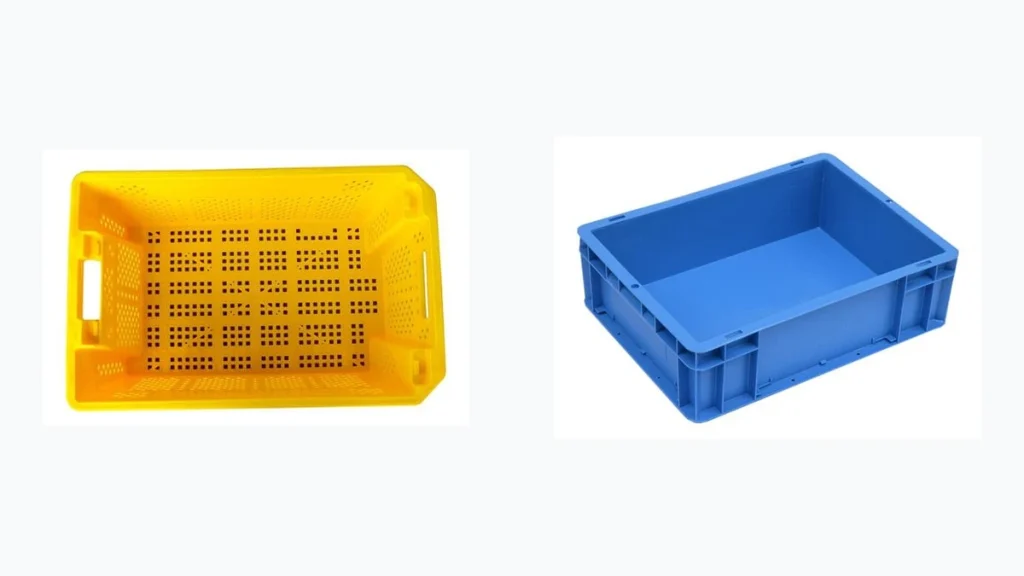
Vented and solid plastic crates can look similar in a product list, but they handle goods differently. The wall pattern affects airflow, drainage, cleaning and how well the crate contains small or loose items. Buyers should choose the wall style together with the load, handling route and return cycle.
The wall design is only one part of the decision. External dimensions, internal clearance, stacking geometry, base design and material still vary by model. A vented crate is not automatically suitable for every food application, and a solid crate is not automatically sealed or leakproof.
The wall pattern changes how the crate works
A vented crate has openings in the walls, base or both. A solid crate uses continuous panels around the load area. Those openings change how air, water, dust and small items move through the container.
This distinction matters during more than transport. The same crate may move through receiving, washing, storage, picking and empty returns. A design that works well in one stage can create extra work in another, so the full handling route should be reviewed before a model is selected.
When a vented plastic crate may fit
Vented walls allow air to move around the contents and give rinse water a path out of the crate. That can be useful for produce, bakery trays and other operations where ventilation or rapid drainage is part of the handling process. The opening size and pattern still need to match the goods inside.
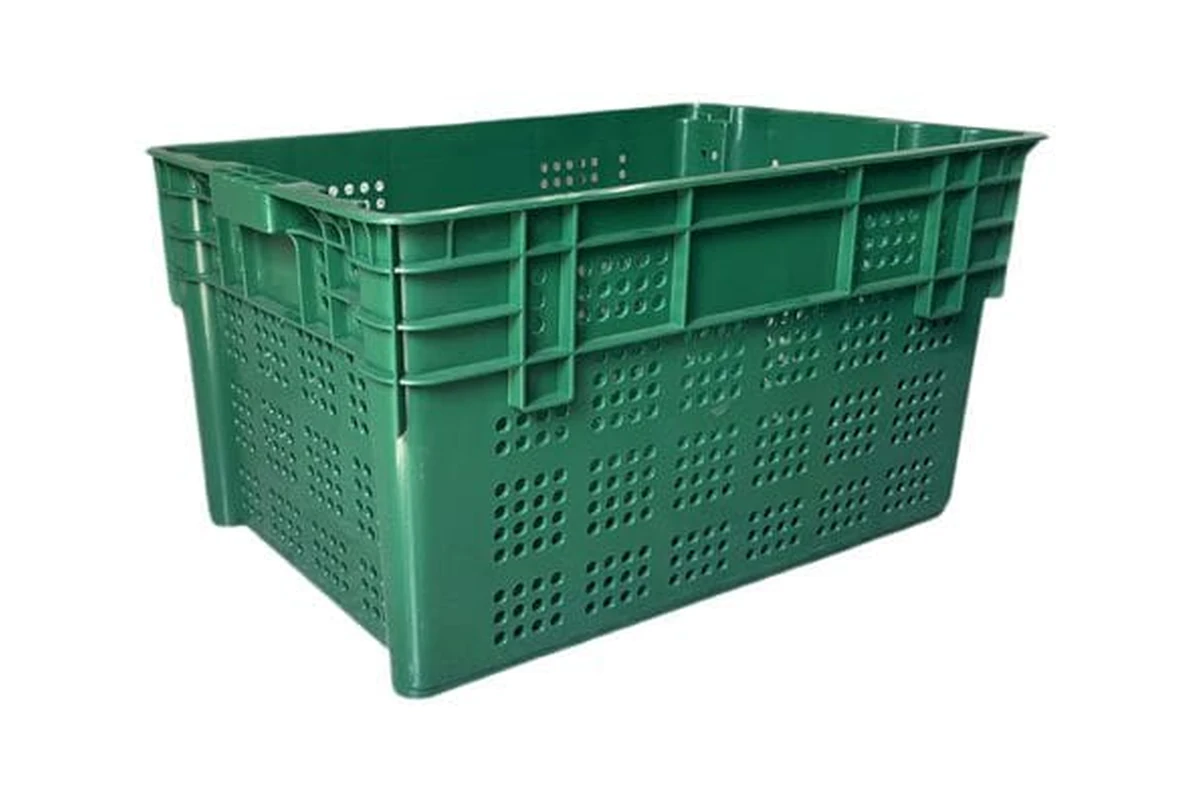
Small parts, loose packaging and flexible bags can press into or pass through large openings. Labels, straps and product edges may also catch on the wall pattern. A sample loading test is more useful than choosing from a front-view image alone.
For a vented crate, confirm:
- the smallest item or package placed inside;
- whether airflow or drainage is required;
- how the crate will be washed and dried;
- whether labels or liners will cover the openings;
- the loaded stacking and handling conditions.
Browse the current plastic crates range to compare available wall and base structures. Product pages should be used to confirm the actual dimensions, material and load information for a specific model.
When a solid plastic crate may fit better
Solid walls keep small parts, powdery residue and loose packaging inside the crate more effectively. They also reduce direct contact between the contents and dust or splash coming from the side. This can suit component handling, warehouse picking and closed-loop transport where containment matters more than airflow.
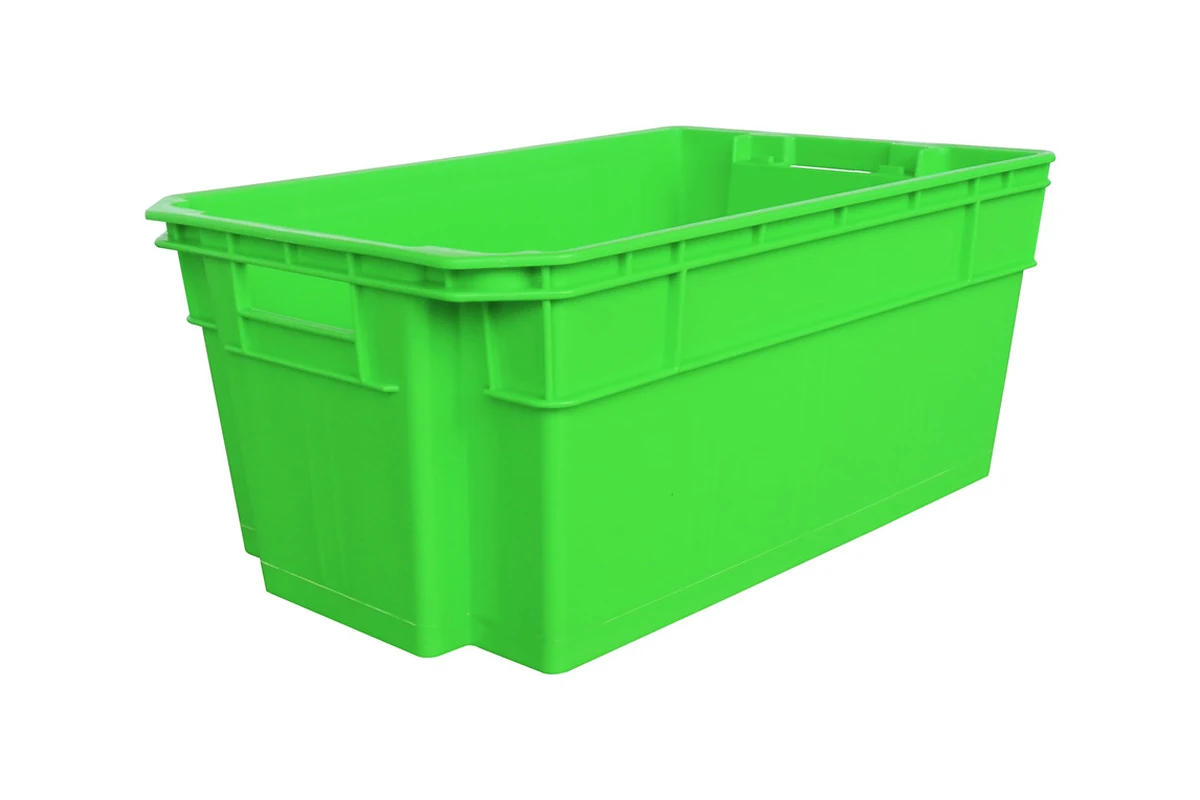
A solid crate still needs a cleaning plan. Water or spilled material has fewer routes to escape, and a solid-wall model is not necessarily watertight. Drain holes, lid options and corner details are model-specific and should be checked on the drawing or a physical sample.
For a solid crate, confirm:
- whether loose items must remain fully contained;
- if a lid or dust protection is required;
- how water or residue will be removed;
- whether the inside surfaces are easy to inspect;
- the stacking pattern when loaded and empty.
The industrial solid wall storage box is one current product example. Its model page, drawing and quotation remain the source for final specifications.
Quick comparison for purchasing teams
| Selection point | Vented crate | Solid crate |
|---|---|---|
| Air movement | Openings allow airflow around the load | Continuous walls limit direct side airflow |
| Drainage | Water can pass through wall or base openings | Drainage depends on model-specific holes or outlets |
| Small items | Opening size must be checked carefully | Continuous walls contain loose items more effectively |
| External dirt and splash | Contents have more exposure through the openings | Walls provide more side protection |
| Cleaning | Openings, ribs and edges need inspection | Broad panels, corners and drainage details need inspection |
The table helps narrow the options, but it does not replace a model review. Wall thickness, rib layout, base design and stacking interface affect performance and vary across the range.
Check stacking, nesting and handling separately
Wall style does not tell you whether a crate stacks, nests or folds. Some models stack when loaded and nest when empty. Others use a fixed stackable shape, an attached lid or a folding wall system. These structures change empty-return volume and the way staff handle the crate.
Forklift handling is generally associated with larger pallet boxes, while smaller crates are commonly moved by hand, on conveyors or on pallets. Confirm the actual route, including transfer points, shelf sizes, conveyor guides and the pallet footprint used below the crates.
If empty return space is a major concern, compare the nestable plastic crate options as a separate structural decision. Nesting should not be assumed from a crate’s wall pattern.
Information to send with an enquiry
A useful enquiry gives the supplier enough information to rule out unsuitable models. Include:
- required external dimensions and usable internal dimensions;
- the product, package or parts carried in each crate;
- loaded weight and whether contents are evenly distributed;
- stacking height and storage conditions;
- handling by hand, conveyor, pallet or other equipment;
- washing, drainage, ventilation and drying requirements;
- lid, label holder, colour or identification needs;
- expected quantity and return-logistics process.
Photos of the load and the current handling setup can clarify details that are easy to miss in a written specification. Contact Zhenghao Plastics with the application information, and the team can compare real crate models without treating vented or solid walls as the only selection factor.