
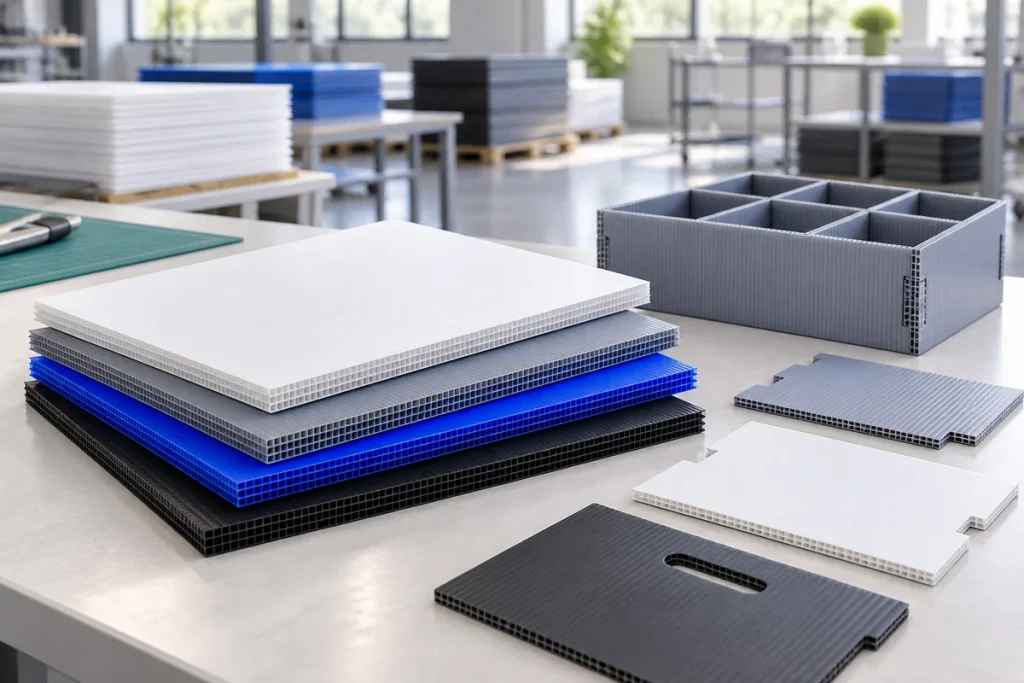
Buying a PP honeycomb panel is easier when the request describes the finished part, not just the sheet name. Buyers may use terms such as PP honeycomb panel, corrugated polypropylene sheet or hollow PP board for the same general panel family. The quotation still depends on what the panel must become, how it will be processed and how it will be used.
A short specification can prevent avoidable questions during sampling and pricing. It also helps the supplier check whether a standard sheet is suitable or whether the project needs cutting, folding, printing or assembly.
Start with the finished application
Describe the part that will be made from the panel. Common examples include reusable packaging, layer pads, dividers, partitions, protective liners, signs and fabricated boxes. A photo, drawing or sample is more useful than a broad request for a “strong plastic board.”
The application affects the questions that follow. A flat divider may need only a finished size and edge direction. A reusable box may need folds, slots, handles, welded joints or internal partitions. A printed sign brings its own surface and artwork requirements.
Buyers who are still comparing available sheet styles can begin with the PP honeycomb panels category. The category shows the current range without turning the purchase request into a long technical document.
Define the panel and finished-part dimensions
Record the required length, width and thickness. State whether these dimensions refer to the supplied sheet or the finished component after cutting and forming. This distinction matters when the part includes folds, tabs or interlocking sections.
A drawing should identify critical dimensions and any tolerance that affects assembly. If the panel fits inside a tote, appliance carton or rack, include the available internal space. When the design is not final, send the target dimensions and ask which details must be confirmed before a sample is produced.
Explain the surface and appearance requirements
Color is only one part of the appearance specification. Tell the supplier whether the surface will remain visible, receive print, contact another component or serve as an internal protective layer. If both sides have different functions, label them clearly on the drawing.
A physical color sample or agreed reference is safer than relying on a screen image. For projects where color is not critical, say so. That can simplify the discussion and keep attention on the features that affect the finished part.
List every conversion step
Do not assume that “custom panel” automatically includes every fabrication operation. List the work needed after the sheet is made. This may include straight cutting, shaped cutting, slotting, creasing, folding, welding, edge treatment or assembly into a box or divider set.
Mark the direction of folds and internal channels when it affects the design. For a component with several pieces, provide a simple bill of materials showing the quantity of each part per set. The polypropylene honeycomb sheet product page can serve as a reference when discussing protective panels for appliance-related packaging, while the final specification should still describe the actual project.
Prepare artwork and marking details
If the panel needs printing, provide the artwork file, print location, color requirements and expected viewing side. Include the size of the printed area and its distance from cuts or folds. For labels or other applied markings, identify the material and placement instead of treating them as part of the print instruction.
A plain unprinted panel does not need an artwork discussion. Stating “no printing” in the request removes ambiguity and lets the quotation focus on the panel and fabrication work.
Confirm quantity, packing and delivery form
Give the order quantity in sheets, finished parts or complete sets. Those units are not interchangeable. If one set contains several dividers, state the number of each piece. For recurring orders, separate the trial quantity from the expected repeat quantity.
Also explain how the material should arrive. Full sheets, cut blanks and assembled packaging take up space differently and may require different packing arrangements. Buyers who need a broader view of sheet materials can compare the parent PP plastic sheets and panels category before settling on the final delivery form.
Use a sample to close open questions
A sample is most useful when everyone knows what it is meant to prove. Note which points should be checked, such as fit, fold position, assembly, surface appearance or print placement. Record any accepted changes after the review so that the production request does not rely on email fragments or memory.
If the project is comparing hollow panels with solid material, review the solid PP plastic sheets category as a separate option. The two structures should not be treated as interchangeable without checking the finished use.
Send a quotation checklist
A practical request can be brief. Include the following information:
- finished application and a photo, drawing or sample;
- sheet or finished-part dimensions, including thickness;
- color and surface requirements;
- cutting, folding, welding, printing or assembly work;
- quantity stated in sheets, pieces or complete sets;
- packing and delivery form;
- sample checks and critical tolerances.
For a current corrugated polypropylene product reference, see the PP corrugated sheet page. To discuss a drawing or finished packaging requirement, send the checklist through the quotation request page. Zhenghao can then review the requested panel, processing steps and delivery format against the information provided.